
|
Developed by 

|
Supported by 


|
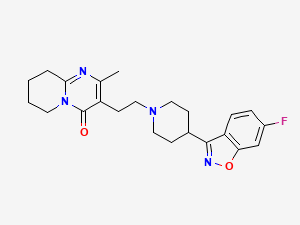
Risperidone
Developer(s)

|
Janssen/Johnson & Johnson Originator
https://www.janssen.com/
Belgium Janssen Pharmaceuticals is a subsidiary company of Johnson & Johnson headquartered in Beerse, Belgium. They focus on manufacturing and developing pharmaceutical products for use in areas such as, Immunology, Infectious Diseases & Vaccines, Pulmonary Hypertension, Cardiovascular & Metabolism, Oncology, and Neuroscience. |

|
Alkermes Inc Originator
https://www.alkermes.com/
Ireland Alkermes, Inc. is the U.S. R&D and manufacturing arm of Alkermes plc, a fully integrated, global biopharmaceutical company. The company focuses on developing innovative medicines for serious psychiatric and neurological disorders. |
Drug structure
risperidone
Pubchem
Drug information
Associated long-acting platforms
Polymer-based particles, Microspheres
Administration route
Oral, Subcutaneous, Intramuscular
Therapeutic area(s)
Use case(s)
Use of drug
Ease of administration
Frequency of administration
User acceptance
Not provided
Dosage
Available dose and strength
12.5 mg; 25 mg; 37.5 mg; 50 mg powder for injection
Maximum dose
50 mg IM every 2 weeks
Recommended dosing regimen
1. Initial Treatment Dose for Schizophrenia & Bipolar: • Administer 25 mg intramuscularly (IM) every 2 weeks. 2. Dose Adjustment for Non-Responders: • If inadequate response at 25 mg, consider increasing to 37.5 mg or 50 mg IM every 2 weeks. • Do not exceed 50 mg every 2 weeks. 3. Special Populations (Renal or Hepatic Impairment): • Initiate treatment at a reduced dose of 12.5 mg IM every 2 weeks. 4. Previously Treated Patients: • Previous antipsychotics should be continued for 3 weeks after the first injection of risperidone LAI to ensure that therapeutic concentrations are maintained until the main release phase of risperidone from the injection site has begun
Additional comments
Risperidone LAI must be reconstituted only in the diluent supplied in the dose pack and must be administered with only the appropriate needle supplied in the dose pack for gluteal (2-inch needle) or deltoid (1-inch needle) administration. All components are required for administration. Do not substitute any components of the dose pack. To ensure that the intended dose of risperidone is delivered, the full contents from the vial must be administered. Administration of partial contents may not deliver the intended dose of risperidone.
Drug information
Drug's link(s)
Generic name
Brand name
Compound type
Drug class/category
Summary
Approval status
Regulatory authorities
Delivery device(s)
No delivery device
Scale-up and manufacturing prospects
Scale-up prospects
Not provided
Tentative equipment list for manufacturing
Static Mixer: Cole Parmer L04667-14. Gear Pumps: Cole Parmer L07149-04, L07002-16. Quench Tank: 55 L capacity. Sieves: 25 µm and 180 µm stainless steel mesh. Lyophilizer: Pilot-scale, ramped cycle (max 30°C, 50 h). Gamma Irradiator: Co-60 source.
Manufacturing
Risperidone microspheres are synthesized by dissolving PLGA (75:25 lactide:glycolide) in ethyl acetate and benzyl alcohol, then adding risperidone base. This organic phase is emulsified with an aqueous phase containing 1% polyvinyl alcohol using a static mixer. The emulsion is quenched in chilled water with buffer, stirred for solvent removal, sieved (25–180 µm), washed, and dried. Optional steps include lyophilization and gamma sterilization for stability and sterility, ensuring controlled release for 14–60 days.
Specific analytical instrument required for characterization of formulation
1. Laser Diffraction Analyzer 2. Scanning Electron Microscope (SEM) 3. High-Performance Liquid Chromatography (HPLC) 4. UV-Vis Spectrophotometer 5. Gas Chromatography (GC) 6. Differential Scanning Calorimetry (DSC) 7. Thermogravimetric Analysis (TGA)
Clinical trials
RIS-PSY-405
Identifier
NCT00177164
Link
https://clinicaltrials.gov/study/NCT00177164
Phase
Phase III
Status
Completed
Sponsor
University of Pittsburgh
More details
We recruited 50 consenting adult subjects with DSM-IV TR diagnoses of bipolar disorder who were about to initiate or switch their current antipsychotic agent. Only 48 patients (23 in the risperidone LAI group and 25 in the oral AAP group) contributed data to the assessments. Patients were titrated and cross-tapered during a 3 month titration and stabilization phase. They were followed for an additional 12 months. Clinical outcomes such as study drop out, adverse events, worsening of symptoms, crisis interventions, need for additional medication, hospitalizations etc. were evaluated from months 3 to 15. The numbers of clinical events (pooled) will be used to evaluate if the long acting injectable form of risperidone has an advantage over the oral second generation antipsychotic agents in te
Purpose
Risperdal Consta for Bipolar Disorder
Interventions
Intervention 1
Countries
Sites / Institutions
Not provided
Trials dates
Anticipated Start Date
Not provided
Actual Start Date
2003-11-01
Anticipated Date of Last Follow-up
2016-03-17
Estimated Primary Completion Date
Not provided
Estimated Completion Date
Not provided
Actual Primary Completion Date
2008-03-01
Actual Completion Date
2009-12-01
Studied populations
Age Cohort
- Adults
- Older Adults
Genders
- All
Accepts pregnant individuals
Unspecified
Accepts lactating individuals
Unspecified
Accepts healthy individuals
No
Comments about the studied populations
Inclusion Criteria: * DSM-IV - TR diagnoses of bipolar disorder (I or II or NOS). * Age 18 to 70 years * Men or women * Any Ethnicity * Currently receiving or willing to receive treatment at sites associated with the Western Psychiatric Institute and Clinic -University of Pittsburgh Medical Center (inpatient or ambulatory) or Mon Yough Community Services, Inc. or at Mayview State Hospital, Bridgeville, PA (inpatient) * Able to provide competent and sign an informed consent document * It is clinically appropriate in the eligible individual to consider antipsychotic treatment for at least 15 months (clinician and investigator determined) * It is clinically appropriate to switch antipsychotic treatment to one of the second generation antipsychotic agents being evaluated in this study. * Ther
Health status
Not provided
Study type
Interventional (clinical trial)
Enrollment
50
Allocation
Randomized
Intervention model
Parallel Assignment
Intervention model description
Not provided
Masking
Open label
Masking description
Not provided
Frequency of administration
Studied LA-formulation(s)
Studied route(s) of administration
Use case
Treatment
Key resources
Consta
Identifier
NCT00571688
Link
https://clinicaltrials.gov/study/NCT00571688
Phase
Marketed
Status
Completed
Sponsor
Vanderbilt University
More details
This study will evaluate the relative effectiveness of risperidone Consta injections occurring every 2 weeks in contrast to treatment as usual in preventing symptomatic relapse and rates of rehospitalization or admission into respite care for bipolar patients. Hypothesis: Risperdal Consta injections every 2 weeks will reduce the number of symptomatic relapses into mania, hypomania, mixed state, or depression, as shown by key indicators that include symptomatic relapse, rehospitalizations, emergency or urgent care visits, respite care, and intensive outpatient treatment as compared to treatment as usual.
Purpose
Does Risperidone Consta Reduce Relapse and Rehospitalization in Bipolar Disorder?
Interventions
Intervention 1
Intervention 2
Countries
Sites / Institutions
Not provided
Trials dates
Anticipated Start Date
Not provided
Actual Start Date
2007-11-01
Anticipated Date of Last Follow-up
2017-06-30
Estimated Primary Completion Date
Not provided
Estimated Completion Date
Not provided
Actual Primary Completion Date
2009-02-01
Actual Completion Date
2009-02-01
Studied populations
Age Cohort
- Adults
Genders
- All
Accepts pregnant individuals
Unspecified
Accepts lactating individuals
Unspecified
Accepts healthy individuals
No
Comments about the studied populations
Inclusion Criteria: * Be physically healthy * 18-60 years of age * Have a DSM-IV diagnosis of bipolar disorder in any phase, but without current psychotic features; with a history of symptomatic relapse on four or more occasions over the last year prior to the initiation of study for the treatment of bipolar disorder (type I or II, manic, hypomanic, mixed, or depressive type), with at least 1 in the previous 6 months. * Have a screening Hamilton Rating Scale for Depression-17 item (HAM-D17) score of \> 8 or a Young Mania Rating Scale (YMRS) \> 8. Exclusion Criteria: * Have any medical condition that would preclude treatment with Risperdal Consta(TM) * Have type 2 diabetes * Have hyperlipidemia (baseline total cholesterol \>280) * Have any clinically significant unstable medical conditio
Health status
Not provided
Study type
Interventional (clinical trial)
Enrollment
50
Allocation
Randomized
Intervention model
Parallel Assignment
Intervention model description
Not provided
Masking
Single blind masking
Masking description
Not provided
Frequency of administration
Studied LA-formulation(s)
Studied route(s) of administration
Not provided
Use case
Treatment
Key resources
HSC20070020H
Identifier
NCT00845572
Link
https://clinicaltrials.gov/study/NCT00845572
Phase
Not provided
Status
Completed
Sponsor
The University of Texas Health Science Center at San Antonio
More details
This study will establish a bi-weekly Consta Club. Participants will begin taking Risperdal Consta after being recommended by their treating physician. As a part of the Consta Club attendees will receive their injection of Risperdal Consta and be educated about important mental health issues. Interviews with study participants will be completed every three months to determine the effectiveness of the change to Risperdal Consta and the bi-weekly group. The overall hypothesis is that the individuals in Consta Club will have a decrease in walk-in visits, emergency procedures and hospitalizations. It is also believed that individuals in Consta Club will have fewer symptoms and better levels of functioning.
Purpose
The Consta Club: A Demonstration Project for Setting up a Consta Club in a Community Mental Health Center
Interventions
Intervention 1
Countries
Sites / Institutions
Not provided
Trials dates
Anticipated Start Date
Not provided
Actual Start Date
2007-01-01
Anticipated Date of Last Follow-up
2012-09-17
Estimated Primary Completion Date
Not provided
Estimated Completion Date
Not provided
Actual Primary Completion Date
2010-06-01
Actual Completion Date
2010-06-01
Studied populations
Age Cohort
- Adults
- Older Adults
Genders
- All
Accepts pregnant individuals
Unspecified
Accepts lactating individuals
Unspecified
Accepts healthy individuals
No
Comments about the studied populations
Inclusion Criteria: 1. Males and females who are able to understand the consent form and who have given informed consent. 2. Between the ages of 18 and 65. 3. Diagnosis of schizophrenia or schizoaffective disorder 4. Receiving treatment with an oral atypical antipsychotic medication for at least two months prior to study 5. Only partial adherence (80% or less) to antipsychotic medication 6. If they have tried Consta but did not receive an adequate trial and did not experience any adverse symptoms. 7. Some responsibility for attending Consta Club meetings and injections. 8. Able to understand and complete rating scales. Exclusion Criteria: 1. History of significant head trauma, seizure disorder, or mental retardation. 2. Has a legal guardian. 3. Alcohol or drug abuse or dependence within
Health status
Not provided
Study type
Interventional (clinical trial)
Enrollment
30
Allocation
Not provided
Intervention model
Single group assignment
Intervention model description
Not provided
Masking
Open label
Masking description
Not provided
Frequency of administration
Studied LA-formulation(s)
Studied route(s) of administration
Use case
Treatment
Key resources
CR005071
Identifier
NCT00294008
Link
https://clinicaltrials.gov/study/NCT00294008
Phase
Not provided
Status
Completed
Sponsor
Janssen Korea, Ltd., Korea
More details
This study is a non-interventional web based registry designed to assess demographic, treatment and outcomes data in patients receiving treatment with long-acting injectable risperidone. One year retrospective data and 2 year prospective data will be collected.
Purpose
A Study to Evaluate Treatment Adherence in Schizophrenia With Long Acting Risperidone Microspheres (e-STAR)
Interventions
Not provided
Countries
Not provided
Sites / Institutions
Not provided
Trials dates
Anticipated Start Date
Not provided
Actual Start Date
2004-12-01
Anticipated Date of Last Follow-up
2014-04-02
Estimated Primary Completion Date
Not provided
Estimated Completion Date
Not provided
Actual Primary Completion Date
2009-06-01
Actual Completion Date
2009-06-01
Studied populations
Age Cohort
Unspecified
Genders
Unspecified
Accepts pregnant individuals
Unspecified
Accepts lactating individuals
Unspecified
Accepts healthy individuals
Unspecified
Comments about the studied populations
Not provided
Health status
Not provided
Study type
Not provided
Enrollment
230
Allocation
Not provided
Intervention model
Not provided
Intervention model description
Not provided
Masking
Not provided
Masking description
Not provided
Frequency of administration
Not provided
Studied LA-formulation(s)
Studied route(s) of administration
Use case
Treatment
Key resources
SOURCE
Identifier
NCT00246194
Link
https://clinicaltrials.gov/study/NCT00246194
Phase
Not provided
Status
Completed
Sponsor
Janssen, LP
More details
The purpose of this study is to examine treatment practices of adult schizophrenia patients by their own doctors, and to assess patient outcomes when treated with long-acting risperidone injection over a two-year period of observation.
Purpose
Observational Study in Patients With Schizophrenia Treated With Long-Acting Risperidone Injection (RISPERDAL CONSTA)
Interventions
Intervention 1
Countries
Sites / Institutions
Not provided
Trials dates
Anticipated Start Date
Not provided
Actual Start Date
2004-09-01
Anticipated Date of Last Follow-up
2014-04-02
Estimated Primary Completion Date
Not provided
Estimated Completion Date
Not provided
Actual Primary Completion Date
2007-11-01
Actual Completion Date
2007-11-01
Studied populations
Age Cohort
Unspecified
Genders
Unspecified
Accepts pregnant individuals
Unspecified
Accepts lactating individuals
Unspecified
Accepts healthy individuals
Unspecified
Comments about the studied populations
Not provided
Health status
Not provided
Study type
Not provided
Enrollment
532
Allocation
Not provided
Intervention model
Not provided
Intervention model description
Not provided
Masking
Not provided
Masking description
Not provided
Frequency of administration
Not provided
Studied LA-formulation(s)
Studied route(s) of administration
Use case
Treatment
Key resources
LY03004 MD
Identifier
NCT02091388
Link
https://clinicaltrials.gov/study/NCT02091388
Phase
Phase I
Status
Completed
Sponsor
Luye Pharma Group Ltd.
More details
This study is to assess the bioavailability of LY03004 compared to Risperdal Consta as well as the evaluate the safety and tolerability and preliminary efficacy of LY03004 with repeat injections
Purpose
Bioavailability of LY03004 and Risperdal® Consta®
Interventions
Intervention 1
Intervention 2
Countries
Sites / Institutions
Not provided
Trials dates
Anticipated Start Date
Not provided
Actual Start Date
2014-09-01
Anticipated Date of Last Follow-up
2015-03-03
Estimated Primary Completion Date
Not provided
Estimated Completion Date
Not provided
Actual Primary Completion Date
2015-01-01
Actual Completion Date
2015-01-01
Studied populations
Age Cohort
- Adults
- Older Adults
Genders
- All
Accepts pregnant individuals
Unspecified
Accepts lactating individuals
Unspecified
Accepts healthy individuals
No
Comments about the studied populations
Inclusion Criteria: 1. Male or female patients aged 18 to 65 years old 2. Patients must have a DSM-IV-TR diagnosis of schizophrenia or schizoaffective disorder based on the Mini-International Neuropsychiatric Interview (MINI) 3. Patients must be clinically stable on antipsychotic medications other than risperidone or paliperidone or clozapine for at least 4 weeks prior to screening, based on clinical assessments AND a Positive and Negative Syndrome Scale (PANSS) total score less than or equal 70 at Screening Visit 4. Patients with a Body Mass Index in range of 18.0 to 35.0 5. Patients with an Informed Consent Form signed by the patient or legally authorized representative Exclusion Criteria: 1. Patients with a mental disorders other than schizophrenia or schizoaffective disorder, accord
Health status
Not provided
Study type
Interventional (clinical trial)
Enrollment
108
Allocation
Randomized
Intervention model
Parallel Assignment
Intervention model description
Not provided
Masking
Open label
Masking description
Not provided
Frequency of administration
Studied LA-formulation(s)
Studied route(s) of administration
Use case
Treatment
Key resources
CR002257
Identifier
NCT00216671
Link
https://clinicaltrials.gov/study/NCT00216671
Phase
Marketed
Status
Completed
Sponsor
Janssen Pharmaceutica N.V., Belgium
More details
The primary objective of this randomized trial was to investigate whether early initiation of treatment with Risperdal Consta after an acute episode was not inferior to the routine approach (oral treatment for 12 weeks followed by treatment with Risperdal Consta). .
Purpose
Long-acting Injectable Risperidone in Patients With Schizophrenia After an Acute Episode
Interventions
Intervention 1
Intervention 2
Countries
Sites / Institutions
Not provided
Trials dates
Anticipated Start Date
Not provided
Actual Start Date
2005-11-01
Anticipated Date of Last Follow-up
2013-07-12
Estimated Primary Completion Date
Not provided
Estimated Completion Date
Not provided
Actual Primary Completion Date
2009-12-01
Actual Completion Date
2009-12-01
Studied populations
Age Cohort
- Adults
- Older Adults
Genders
- All
Accepts pregnant individuals
Unspecified
Accepts lactating individuals
Unspecified
Accepts healthy individuals
No
Comments about the studied populations
Inclusion Criteria: * Diagnosis of schizophrenia by criteria of Diagnostic and Statistical Manual of Mental Diseases, Fourth Edition (DSM-IV) * acute episode of schizophrenia within 2 weeks of study entry * o subjects currently not treated or treated with oral antipsychotics or short-acting injectable antipsychotics (zuclopenthixol acutard is allowed) at doses not exceeding the registered dose * Positive And Negative Syndrome Scale (PANSS) score \>=80 * Clinical Global Impression - Severity (CGI-S) score \>=5 Exclusion Criteria: * DSM-IV axis I diagnosis other than schizophrenia * known hypersensitivity or lack of response to risperidone * pregnant or nursing females, or those without adequate contraception * alcohol or drug abuse or dependence diagnosed in the last month prior to entry
Health status
Not provided
Study type
Interventional (clinical trial)
Enrollment
220
Allocation
Randomized
Intervention model
Parallel Assignment
Intervention model description
Not provided
Masking
Open label
Masking description
Not provided
Frequency of administration
Studied LA-formulation(s)
Studied route(s) of administration
Use case
Treatment
Key resources
RIS-EMR-4033
Identifier
NCT00148083
Link
https://clinicaltrials.gov/study/NCT00148083
Phase
Phase III
Status
Completed
Sponsor
University of Illinois at Chicago
More details
The specific aim of this study is to determine whether the new, long-acting, form of risperidone, Risperdal Consta, improves the ability of schizophrenia patients to benefit from skills training. The hypothesis guiding this study is that Risperdal Consta, by improving verbal memory, will improve the ability to benefit from skills training interventions among schizophrenia patients. The primary objective of this study is to compare patients on Risperdal Consta to patients on other atypical antipsychotic medications in terms of their ability to benefit from skills training interventions. A secondary objective of this study is to determine whether patients taking Risperdal Consta improve in other areas of cognitive functioning and social functioning.
Purpose
Effects of Risperdal Consta on Ability to Benefit From Social Skills Training in Schizophrenia
Interventions
Intervention 1
Intervention 2
Countries
Sites / Institutions
Not provided
Trials dates
Anticipated Start Date
Not provided
Actual Start Date
2005-09-01
Anticipated Date of Last Follow-up
2019-05-14
Estimated Primary Completion Date
Not provided
Estimated Completion Date
Not provided
Actual Primary Completion Date
2006-03-01
Actual Completion Date
2006-03-01
Studied populations
Age Cohort
- Adults
Genders
- All
Accepts pregnant individuals
Unspecified
Accepts lactating individuals
Unspecified
Accepts healthy individuals
No
Comments about the studied populations
Inclusion Criteria: 1. Schizophrenia or schizoaffective disorder 2. Ages 18-55 3. Ability to give informed consent 4. Good general physical health or stable chronic medical conditions 5. Ability to be on a single antipsychotic medication 6. History of inattentiveness in psychosocial treatment settings 7. Poor social skills 8. Must be receiving a single antipsychotic medication 9. Must be clinically stable - defined by the absence of prominent delusions, hallucinations, disorganized speech, or grossly disorganized or catatonic behavior. However, there must also be continuing evidence of impairment, as indicated by the presence of negative symptoms or two or more symptoms of schizophrenia listed in Criterion A of the DSM-IV, in attenuated form (e.g., odd beliefs, unusual perceptual experien
Health status
Not provided
Study type
Interventional (clinical trial)
Enrollment
5
Allocation
Randomized
Intervention model
Factorial assignment
Intervention model description
Not provided
Masking
Single blind masking
Masking description
Not provided
Frequency of administration
Not provided
Studied LA-formulation(s)
Studied route(s) of administration
Use case
Treatment
Key resources
070580
Identifier
NCT00539071
Link
https://clinicaltrials.gov/study/NCT00539071
Phase
Marketed
Status
Completed
Sponsor
Northwestern University
More details
The purpose of this study is to look at two doses of long-acting injectable risperidone (Risperdal Consta). The study will use a usual dose of Risperdal Consta (50 mg given every two weeks) or a higher dose (75 mg-100 mg given every two weeks) to see which one is better at improving symptoms of schizophrenia or schizoaffective disorder.
Purpose
High Dose Risperidone Consta for Patients With Schizophrenia With Poor Response to Risperidone
Interventions
Intervention 1
Intervention 2
Intervention 3
Countries
Sites / Institutions
Not provided
Trials dates
Anticipated Start Date
Not provided
Actual Start Date
2008-03-01
Anticipated Date of Last Follow-up
2025-09-15
Estimated Primary Completion Date
Not provided
Estimated Completion Date
Not provided
Actual Primary Completion Date
2012-05-01
Actual Completion Date
2012-05-01
Studied populations
Age Cohort
- Adults
- Older Adults
Genders
- All
Accepts pregnant individuals
Unspecified
Accepts lactating individuals
Unspecified
Accepts healthy individuals
No
Comments about the studied populations
Inclusion Criteria: * Patients diagnosed with schizophrenia or schizoaffective disorder * Able to give written informed consent. * Moderate psychosis persists although compliant with medication * Patients must have an inadequate response to two antipsychotic medications (can be risperidone, oral or long acting - but not required), at doses that are within the upper end of the standard dosage range * Patients must have a Clinical Global Impression - Severity (CGI-S) scale score at screening of at least moderate severity and a Personal and Social Performance Scale (PSP) score of 60 or below. * At the time of screening, eligible patients will be receiving or have received treatment with risperidone oral or Consta, or a combination that does not exceed 50 mg q 2 weeks of Consta or oral risper
Health status
Not provided
Study type
Interventional (clinical trial)
Enrollment
160
Allocation
Randomized
Intervention model
Parallel Assignment
Intervention model description
Not provided
Masking
Quadruple-blind masking
Masking description
Not provided
Frequency of administration
Studied LA-formulation(s)
Studied route(s) of administration
Use case
Treatment
Key resources
CR013483
Identifier
NCT01894984
Link
https://clinicaltrials.gov/study/NCT01894984
Phase
Not provided
Status
Terminated
Sponsor
Xian-Janssen Pharmaceutical Ltd.
More details
The purpose of this study is to evaluate the long-term treatment efficacy, and safety of risperidone long-acting injection in participants with schizophrenia (psychiatric disorder with symptoms of emotional instability, detachment from reality, often with delusions and hallucinations, and withdrawal into the self).
Purpose
An Observational Study to Evaluate Efficacy and Safety of Risperidone Long-Acting Injection for Treatment of Schizophrenia
Interventions
Not provided
Countries
Not provided
Sites / Institutions
Not provided
Trials dates
Anticipated Start Date
Not provided
Actual Start Date
2007-01-01
Anticipated Date of Last Follow-up
2014-04-22
Estimated Primary Completion Date
Not provided
Estimated Completion Date
Not provided
Actual Primary Completion Date
2009-12-01
Actual Completion Date
2009-12-01
Studied populations
Age Cohort
Unspecified
Genders
Unspecified
Accepts pregnant individuals
Unspecified
Accepts lactating individuals
Unspecified
Accepts healthy individuals
Unspecified
Comments about the studied populations
Not provided
Health status
Not provided
Study type
Not provided
Enrollment
640
Allocation
Not provided
Intervention model
Not provided
Intervention model description
Not provided
Masking
Not provided
Masking description
Not provided
Frequency of administration
Studied LA-formulation(s)
Studied route(s) of administration
Use case
Treatment
Key resources
17359
Identifier
NCT00130923
Link
https://clinicaltrials.gov/study/NCT00130923
Phase
Marketed
Status
Completed
Sponsor
Dartmouth-Hitchcock Medical Center
More details
The purpose of this study is to compare the efficacy of oral risperidone (Risperdal) to risperidone long-acting (Consta) in reducing alcohol use in persons diagnosed with schizophrenia or schizoaffective disorder.
Purpose
Risperidone Long-acting Versus Oral Risperidone in Patients With Schizophrenia and Alcohol Use Disorder
Interventions
Intervention 1
Intervention 2
Countries
Sites / Institutions
Not provided
Trials dates
Anticipated Start Date
Not provided
Actual Start Date
2005-09-01
Anticipated Date of Last Follow-up
2019-04-16
Estimated Primary Completion Date
Not provided
Estimated Completion Date
Not provided
Actual Primary Completion Date
2009-06-01
Actual Completion Date
2010-07-01
Studied populations
Age Cohort
- Adults
- Older Adults
Genders
- All
Accepts pregnant individuals
Unspecified
Accepts lactating individuals
Unspecified
Accepts healthy individuals
No
Comments about the studied populations
Inclusion Criteria: * Ages 18-65 * Schizophrenia or schizoaffective disorder * Meets the Structured Clinical Interview for DSM-IV (SCID) criteria for an alcohol use disorder * Alcohol use on at least 5 days during the 4 weeks prior to randomization * Patient is medically stable to start either form of risperidone. Exclusion Criteria: * Current treatment with clozapine. * Current treatment with injectable risperidone long-acting. * Currently pregnant, planning to become pregnant, or unwilling to use an acceptable form of birth control. * Change in medications (dose of current medication, discontinuation of medication, or new medication) in past 30 days. * History of or current breast cancer. * History of intolerance of or allergy to risperidone or risperidone long-acting. * Currently res
Health status
Not provided
Study type
Interventional (clinical trial)
Enrollment
95
Allocation
Randomized
Intervention model
Parallel Assignment
Intervention model description
Not provided
Masking
Open label
Masking description
Not provided
Frequency of administration
Studied LA-formulation(s)
Studied route(s) of administration
Use case
Treatment
Key resources
CR011992
Identifier
NCT00378092
Link
https://clinicaltrials.gov/study/NCT00378092
Phase
Marketed
Status
Completed
Sponsor
Janssen Cilag N.V./S.A.
More details
The purpose of this study is to evaluate the outcome of medication discontinuation, the safety and effectiveness of re-initiating risperidone long acting injection (RLAI) in case of relapse (the return of a medical problem) of schizophrenia (psychiatric disorder with symptoms of emotional instability, detachment from reality, often with delusions and hallucinations, and withdrawal into the self) during the study observation period of 36 months.
Purpose
A Follow-Up Study of Schizophrenic Participants Following Treatment Discontinuation After Remission From a First Psychotic Episode
Interventions
Intervention 1
Intervention 2
Intervention 3
Countries
Sites / Institutions
Not provided
Trials dates
Anticipated Start Date
Not provided
Actual Start Date
2006-04-01
Anticipated Date of Last Follow-up
2014-05-07
Estimated Primary Completion Date
Not provided
Estimated Completion Date
Not provided
Actual Primary Completion Date
2010-03-01
Actual Completion Date
2010-03-01
Studied populations
Age Cohort
- Children
- Adults
Genders
- All
Accepts pregnant individuals
Unspecified
Accepts lactating individuals
Unspecified
Accepts healthy individuals
No
Comments about the studied populations
Inclusion Criteria: - Participants who completed 24 months RIS-PSY-301 study - Surgically sterile female participants or practicing an effective method of birth control before entry and throughout the study; and must have shown a negative urine serum pregnancy test at baseline before study entry - Participants who have signed informed consent document Exclusion Criteria: - Participants requiring treatment with mood stabilizers or antidepressants at study entry - Participants with evidence of alcohol or drug abuse or dependence (except for nicotine and caffeine dependence) according to Diagnostic and Statistical Manual of Mental Disorders (DSM-IV) criteria diagnosed in the last month before entry - Participants with a history of severe drug allergy, drug hypersensitivity, or neuroleptic mal
Health status
Not provided
Study type
Interventional (clinical trial)
Enrollment
33
Allocation
Not provided
Intervention model
Single group assignment
Intervention model description
Not provided
Masking
Open label
Masking description
Not provided
Frequency of administration
Studied LA-formulation(s)
Studied route(s) of administration
Use case
Treatment
Key resources
CR012289
Identifier
NCT00589914
Link
https://clinicaltrials.gov/study/NCT00589914
Phase
Phase III
Status
Completed
Sponsor
Johnson & Johnson Pharmaceutical Research & Development, L.L.C.
More details
The purpose of this study is to demonstrate the effectiveness of paliperidone palmitate in patients with Schizophrenia.
Purpose
Comparison of Paliperidone Palmitate and RISPERDAL CONSTA in Patients With Schizophrenia
Interventions
Intervention 1
Intervention 2
Countries
Sites / Institutions
Not provided
Trials dates
Anticipated Start Date
Not provided
Actual Start Date
2007-03-01
Anticipated Date of Last Follow-up
2014-06-11
Estimated Primary Completion Date
Not provided
Estimated Completion Date
Not provided
Actual Primary Completion Date
2009-06-01
Actual Completion Date
2009-06-01
Studied populations
Age Cohort
- Adults
- Older Adults
Genders
- All
Accepts pregnant individuals
Unspecified
Accepts lactating individuals
Unspecified
Accepts healthy individuals
No
Comments about the studied populations
Inclusion Criteria: * Meet diagnostic criteria for schizophrenia according to Diagnostic and Statistical Manual of Mental Disorders, Fourth Edition (DSM-IV) criteria as specified by the protocol for at least 1 year before screening * Prior medical records, written documentation or verbal information obtained from previous psychiatric providers obtained by the investigator must be consistent with the diagnosis of schizophrenia * A total PANSS score between 60 and 120, inclusive, at screening and baseline; Body mass index (BMI) at the screening visit BMI at least 17 kg/m2 * Female patients must be postmenopausal for at least 2 years, surgically sterile, abstinent, or, if sexually active, be practicing an effective method of birth control before study entry and throughout the study as specif
Health status
Not provided
Study type
Interventional (clinical trial)
Enrollment
1221
Allocation
Randomized
Intervention model
Parallel Assignment
Intervention model description
Not provided
Masking
Quadruple-blind masking
Masking description
Not provided
Frequency of administration
Not provided
Studied LA-formulation(s)
Studied route(s) of administration
Use case
Treatment
Key resources
CR012484
Identifier
NCT01726335
Link
https://clinicaltrials.gov/study/NCT01726335
Phase
Marketed
Status
Completed
Sponsor
Janssen-Cilag Ltd.
More details
The purpose of this study is to evaluate efficacy, safety and tolerance of long-acting risperidone when switching from oral antipsychotics in participants with schizophrenia (psychiatric disorder with symptoms of emotional instability, detachment from reality, often with delusions and hallucinations, and withdrawal into the self).
Purpose
Switching From Oral Antipsychotics to Long-Acting Risperidone in Participants With Schizophrenia
Interventions
Intervention 1
Countries
Sites / Institutions
Not provided
Trials dates
Anticipated Start Date
Not provided
Actual Start Date
2006-01-01
Anticipated Date of Last Follow-up
2014-04-10
Estimated Primary Completion Date
Not provided
Estimated Completion Date
Not provided
Actual Primary Completion Date
2008-03-01
Actual Completion Date
2008-03-01
Studied populations
Age Cohort
- Adults
Genders
- All
Accepts pregnant individuals
Unspecified
Accepts lactating individuals
Unspecified
Accepts healthy individuals
No
Comments about the studied populations
Inclusion Criteria: * Have schizophrenia diagnosis by Diagnostic and Statistical Manual of Mental Disorders, fourth edition (DSM-IV) * Be on treatment with oral antipsychotic of first or second generation, for a minimum time of 12 months * Previous history of bad adhesion to oral antipsychotic treatment in the last 12 months * Total Positive and Negative Syndrome Scale score less than or equal to 90, the conceptual disorganization, hallucinatory behavior, suspicion and not usual content of thought must be less than or equal to 4 * Be not pregnant as showed on negative pregnancy serum test Exclusion Criteria: * Contraindication or known hypersensitivity to risperidone * Previous history of unsatisfactory response to risperidone * Previous history of refractivity to the other second gener
Health status
Not provided
Study type
Interventional (clinical trial)
Enrollment
53
Allocation
Not provided
Intervention model
Single group assignment
Intervention model description
Not provided
Masking
Open label
Masking description
Not provided
Frequency of administration
Studied LA-formulation(s)
Studied route(s) of administration
Use case
Treatment
Key resources
CR002278
Identifier
NCT00132678
Link
https://clinicaltrials.gov/study/NCT00132678
Phase
Phase III
Status
Completed
Sponsor
Johnson & Johnson Pharmaceutical Research & Development, L.L.C.
More details
The purpose of this study is to determine if risperidone is effective and safe in the prevention of mood episodes in patients with bipolar 1 disorder.
Purpose
A Study of the Safety and Efficacy of Injectable Risperidone in the Prevention of Bipolar Mood Episodes
Interventions
Intervention 1
Intervention 2
Countries
Sites / Institutions
Not provided
Trials dates
Anticipated Start Date
Not provided
Actual Start Date
2005-02-01
Anticipated Date of Last Follow-up
2013-07-23
Estimated Primary Completion Date
Not provided
Estimated Completion Date
Not provided
Actual Primary Completion Date
2007-10-01
Actual Completion Date
2007-12-01
Studied populations
Age Cohort
- Adults
- Older Adults
Genders
- All
Accepts pregnant individuals
Unspecified
Accepts lactating individuals
Unspecified
Accepts healthy individuals
No
Comments about the studied populations
Inclusion Criteria: * Diagnosis of bipolar 1 disorder, currently experiencing a mixed or manic episode or stable * Two or more bipolar mood episodes in the last 2 years excluding current episode * Negative pregnancy test Exclusion Criteria: * History of \> than 4 mood episodes a year during the last two years * patients experiencing a depressive episode * History of antisocial or borderline personality illness * Has unstable or serious general medical illness * Has received medications disallowed by study criteria.
Health status
Not provided
Study type
Interventional (clinical trial)
Enrollment
559
Allocation
Randomized
Intervention model
Parallel Assignment
Intervention model description
Not provided
Masking
Quadruple-blind masking
Masking description
Not provided
Frequency of administration
Studied LA-formulation(s)
Studied route(s) of administration
Use case
Treatment
Key resources
CR006121
Identifier
NCT00299702
Link
https://clinicaltrials.gov/study/NCT00299702
Phase
Marketed
Status
Completed
Sponsor
Johnson & Johnson Pharmaceutical Research & Development, L.L.C.
More details
The purpose of this study is to compare the effectiveness of two antipsychotic medications, Risperdal® Consta® versus Abilify®, over a 2-year treatment period in the long-term maintenance of patients with schizophrenia.
Purpose
Evaluation of Effectiveness of Risperdal® Consta® Compared to Abilify® Over a Two-year Period in Patients With Schizophrenia
Interventions
Not provided
Countries
Not provided
Sites / Institutions
Not provided
Trials dates
Anticipated Start Date
Not provided
Actual Start Date
2006-02-01
Anticipated Date of Last Follow-up
2011-12-22
Estimated Primary Completion Date
Not provided
Estimated Completion Date
Not provided
Actual Primary Completion Date
2009-01-01
Actual Completion Date
2009-01-01
Studied populations
Age Cohort
- Adults
- Older Adults
Genders
- All
Accepts pregnant individuals
Unspecified
Accepts lactating individuals
Unspecified
Accepts healthy individuals
No
Comments about the studied populations
Inclusion Criteria: * Patients with diagnosis of schizophrenia * Patient has had at least 2 psychotic relapses in the two years prior to study entry * patient is not adequately benefiting from their current antipsychotic medication Exclusion Criteria: * Patients that have been hospitalized or had major medication changes within 2 months of study entry * Patients currently experiencing, or who have experienced worsening of disease symptoms within 2 months of study entry * Patients currently using clozapine or carbamazepine * Patients who have undergone electroconvulsive therapy or depot antipsychotic treatment within 6 months prior to study entry * pregnant or breast-feeding
Health status
Not provided
Study type
Interventional (clinical trial)
Enrollment
355
Allocation
Randomized
Intervention model
Parallel Assignment
Intervention model description
Not provided
Masking
Open label
Masking description
Not provided
Frequency of administration
Studied LA-formulation(s)
Studied route(s) of administration
Use case
Treatment
Key resources
CR002269
Identifier
NCT00216476
Link
https://clinicaltrials.gov/study/NCT00216476
Phase
Phase III
Status
Completed
Sponsor
Janssen-Cilag International NV
More details
The purpose of this study is to investigate whether a long-acting injectable formulation of risperidone provides better effectiveness over 2 years, as measured by the time to relapse, compared with quetiapine tablets in a routine psychiatric care setting. Aripiprazole will be investigated in a descriptive manner.
Purpose
A Study of Relapse Prevention and the Effectiveness of Long-acting Injectable Risperidone and Quetiapine Tablets in the Treatment of Patients With Schizophrenia or Schizoaffective Disorder
Interventions
Intervention 1
Intervention 2
Intervention 3
Countries
Sites / Institutions
Not provided
Trials dates
Anticipated Start Date
Not provided
Actual Start Date
2004-10-01
Anticipated Date of Last Follow-up
2014-03-25
Estimated Primary Completion Date
Not provided
Estimated Completion Date
Not provided
Actual Primary Completion Date
2007-11-01
Actual Completion Date
2007-11-01
Studied populations
Age Cohort
- Adults
- Older Adults
Genders
- All
Accepts pregnant individuals
Unspecified
Accepts lactating individuals
Unspecified
Accepts healthy individuals
No
Comments about the studied populations
Inclusion Criteria: * Diagnosis of schizophrenia or schizoaffective disorder according to the Diagnostic and Statistical Manual of Mental Diseases, 4th edition (DSM-IV) * Patients currently treated with oral risperidone, olanzapine or a conventional neuroleptic monotherapy at doses not exceeding 6 mg risperdal, 20 mg olanzapine, or a conversion dose of 10 mg haloperidol for oral conventional agents * Patients who are stable (judged clinically stable by the investigator and on a stable dose of medication for 4 weeks or longer) but not optimally treated (non-satisfactory treatment regarding symptoms or adverse events) Exclusion Criteria: * Diagnosis other than schizophrenia or schizoaffective disorder by DSM-IV Axis I criteria * Patients being treated with antipsychotic agents other than
Health status
Not provided
Study type
Interventional (clinical trial)
Enrollment
753
Allocation
Randomized
Intervention model
Parallel Assignment
Intervention model description
Not provided
Masking
Open label
Masking description
Not provided
Frequency of administration
Studied LA-formulation(s)
Studied route(s) of administration
Use case
Treatment
Key resources
ZX003-1401
Identifier
NCT02411526
Link
https://clinicaltrials.gov/study/NCT02411526
Phase
Phase I
Status
Completed
Sponsor
Zogenix, Inc.
More details
This is an open-label, multiple dose, PK and safety study in patients with chronic, stable schizophrenia or schizoaffective disorder.
Purpose
Safety and PK Trial With Injectable ZX003 (Risperidone-SABER®) Compared to Risperdal® Consta® in Stable Schizophrenia
Interventions
Intervention 1
Intervention 2
Intervention 3
Countries
Sites / Institutions
Not provided
Trials dates
Anticipated Start Date
Not provided
Actual Start Date
2015-02-01
Anticipated Date of Last Follow-up
2022-10-27
Estimated Primary Completion Date
Not provided
Estimated Completion Date
Not provided
Actual Primary Completion Date
2015-09-01
Actual Completion Date
2015-09-01
Studied populations
Age Cohort
- Adults
Genders
- All
Accepts pregnant individuals
Unspecified
Accepts lactating individuals
Unspecified
Accepts healthy individuals
No
Comments about the studied populations
Inclusion Criteria: 1. Male or female patients 18 - 60 years of age, inclusive. 2. Diagnosis of schizophrenia, or schizoaffective disorder as per DSM-V criteria in the past 6 months or more, dependent on diagnosis. 3. Currently on maintenance antipsychotic medication (ie, patients treated with antipsychotic medication with stable doses in the 4 weeks prior to Screening and no psychosis-related dose changes in the 8 weeks prior to Screening). 4. Body Mass Index (BMI) ≥20 and ≤40 kg/m2. 5. Female patients who are non-childbearing potential (surgically sterile \[hysterectomy\]) or post-menopausal ≥2 years; or non-pregnant, non-lactating females of childbearing potential who agree to use medically acceptable forms of birth control (hormonal contraception, abstinence, diaphragm with spermicide
Health status
Not provided
Study type
Interventional (clinical trial)
Enrollment
60
Allocation
Not provided
Intervention model
Parallel Assignment
Intervention model description
Not provided
Masking
Open label
Masking description
Not provided
Frequency of administration
Studied LA-formulation(s)
Studied route(s) of administration
Use case
Treatment
Key resources
CR013873
Identifier
NCT00526877
Link
https://clinicaltrials.gov/study/NCT00526877
Phase
Marketed
Status
Completed
Sponsor
Johnson & Johnson Taiwan Ltd
More details
The purpose of this study is to evaluate the efficacy and safety of long-acting risperidone microspheres (small uniformly-sized spherical particles, of micrometer dimensions, frequently labeled with radioisotopes or various reagents acting as tags or markers) in participants with schizophrenia (psychiatric disorder with symptoms of emotional instability, detachment from reality, often with delusions and hallucinations, and withdrawal into the self) and schizoaffective disorders (a mixed psychiatric disorder relating to a complex psychotic state that has features of both schizophrenia and a mood disorder such as bipolar disorder), who are receiving psychiatric home-care treatment .
Purpose
An Efficacy and Safety Study of Long-acting Risperidone in Participants With Schizophrenia or Schizoaffective Disorders Who Are Receiving Psychiatric Home Care Treatment
Interventions
Not provided
Countries
Not provided
Sites / Institutions
Not provided
Trials dates
Anticipated Start Date
Not provided
Actual Start Date
2007-07-01
Anticipated Date of Last Follow-up
2014-02-27
Estimated Primary Completion Date
Not provided
Estimated Completion Date
Not provided
Actual Primary Completion Date
2009-01-01
Actual Completion Date
2009-01-01
Studied populations
Age Cohort
- Adults
- Older Adults
Genders
- All
Accepts pregnant individuals
Unspecified
Accepts lactating individuals
Unspecified
Accepts healthy individuals
No
Comments about the studied populations
Inclusion Criteria: * Meet the diagnostic criteria for schizophrenia or schizoaffective disorder according to Diagnostic and Statistical Manual of Mental Disorders, fourth edition (DSM-IV) * Participant has been given an adequate dose of an appropriate antipsychotic for an adequate period of time prior to enrollment, but previous treatment is considered unsatisfactory due to one or more of the following reasons: lack of efficacy, lack of tolerability or safety, lack of compliance and/or other reasons to switch to another antipsychotic medication * Female participants must be postmenopausal, surgically sterile, or practicing an effective method of birth control before entry and throughout the study; have a negative urine betahuman chorionic gonadotropin (HCG) pregnancy test at screening; a
Health status
Not provided
Study type
Interventional (clinical trial)
Enrollment
31
Allocation
Not provided
Intervention model
Single group assignment
Intervention model description
Not provided
Masking
Open label
Masking description
Not provided
Frequency of administration
Studied LA-formulation(s)
Studied route(s) of administration
Use case
Treatment
Key resources
P50MH066286
Identifier
NCT00330551
Link
https://clinicaltrials.gov/study/NCT00330551
Phase
Marketed
Status
Completed
Sponsor
University of California, Los Angeles
More details
This study will determine the effectiveness of oral risperidone versus long-acting injectable risperidone in treating people with first-episode schizophrenia.
Purpose
Oral Versus Injectable Risperidone for Treating First-Episode Schizophrenia
Interventions
Intervention 1
Intervention 2
Countries
Sites / Institutions
Not provided
Trials dates
Anticipated Start Date
Not provided
Actual Start Date
2006-03-01
Anticipated Date of Last Follow-up
2023-02-04
Estimated Primary Completion Date
Not provided
Estimated Completion Date
Not provided
Actual Primary Completion Date
2012-11-01
Actual Completion Date
2012-11-01
Studied populations
Age Cohort
- Adults
Genders
- All
Accepts pregnant individuals
Unspecified
Accepts lactating individuals
Unspecified
Accepts healthy individuals
Yes
Comments about the studied populations
Inclusion Criteria: * DSM-IV diagnosis of schizophrenia, schizoaffective disorder (depressed type), or schizophreniform disorder * First major episode of psychotic symptoms occurred within 2 years prior to study entry * Participant in the UCLA Center for Neurocognition and Emotion in Schizophrenia Exclusion Criteria: * Neurological disorder or injury (e.g., encephalitis, epilepsy, traumatic brain injury) * Mental retardation (e.g., premorbid IQ less than 70) * Significant alcohol or substance abuse within 6 months prior to study entry * Inability to complete research measures in English * Any condition that may make risperidone use medically inadvisable
Health status
Not provided
Study type
Interventional (clinical trial)
Enrollment
126
Allocation
Randomized
Intervention model
Parallel Assignment
Intervention model description
Not provided
Masking
Open label
Masking description
Not provided
Frequency of administration
Studied LA-formulation(s)
Studied route(s) of administration
Use case
Treatment
Key resources
LY03004/CT-USA-104
Identifier
NCT02186769
Link
https://clinicaltrials.gov/study/NCT02186769
Phase
Phase I
Status
Completed
Sponsor
Luye Pharma Group Ltd.
More details
A review of the amount of drug in your blood over time.
Purpose
An Randomized Open-Label PK Study of LY03004 Compared to Risperdal® Consta® in Stable Patients With Schizophrenia or Schizoaffective Disorder
Interventions
Intervention 1
Intervention 2
Countries
Sites / Institutions
Not provided
Trials dates
Anticipated Start Date
Not provided
Actual Start Date
2014-07-01
Anticipated Date of Last Follow-up
2015-06-17
Estimated Primary Completion Date
Not provided
Estimated Completion Date
Not provided
Actual Primary Completion Date
2015-04-01
Actual Completion Date
2015-04-01
Studied populations
Age Cohort
- Adults
- Older Adults
Genders
- All
Accepts pregnant individuals
Unspecified
Accepts lactating individuals
Unspecified
Accepts healthy individuals
No
Comments about the studied populations
Inclusion Criteria: 1. Male or female patients aged 18 to 65 years old; 2. Patients must have a DSM-IV diagnosis of schizophrenia or schizoaffective disorder based on the Mini-International Neuropsychiatric Interview (MINI); 3. Patients must be clinically stable on antipsychotic medications other than risperidone or paliperidone or clozapine for at least 4 weeks prior to screening, based on clinical assessments and a Positive and Negative Syndrome Scale (PANSS) total score less than or equal 70 at screening visit; 4. Patients with a Body Mass Index in range of 18.0 to 35.0; 5. Patients with an Informed consent form signed by the patient or legally acceptable representative Exclusion Criteria: 1. Patients with a mental disorders other than schizophrenia or schizoaffective disorder, accor
Health status
Not provided
Study type
Interventional (clinical trial)
Enrollment
16
Allocation
Randomized
Intervention model
Parallel Assignment
Intervention model description
Not provided
Masking
Open label
Masking description
Not provided
Frequency of administration
Studied LA-formulation(s)
Studied route(s) of administration
Use case
Treatment
Key resources
RIS-EMR-4021
Identifier
NCT00385801
Link
https://clinicaltrials.gov/study/NCT00385801
Phase
Phase II
Status
Completed
Sponsor
Massachusetts General Hospital
More details
The purpose of this study is to examine the effects of the administration of Risperidal-Consta on the brain's reward circuitry using Magnetic resonance Imaging (MRI), behavioral tests and measuring cocaine craving and use among people with active cocaine dependence.
Purpose
Study of the Effects of Risperdal Consta on Brain Reward Circuitry Function, Craving and Cocaine Use in Active Cocaine Dependence
Interventions
Intervention 1
Intervention 2
Countries
Sites / Institutions
Not provided
Trials dates
Anticipated Start Date
Not provided
Actual Start Date
2005-09-01
Anticipated Date of Last Follow-up
2017-03-20
Estimated Primary Completion Date
Not provided
Estimated Completion Date
Not provided
Actual Primary Completion Date
2010-09-01
Actual Completion Date
2010-09-01
Studied populations
Age Cohort
- Adults
Genders
- Male
Accepts pregnant individuals
Unspecified
Accepts lactating individuals
Unspecified
Accepts healthy individuals
Yes
Comments about the studied populations
Inclusion Criteria: * current cocaine dependence who use cocaine at least every 2 weeks * Non-treatment seekers who intend to continue using cocaine * Male 18-60 years of age * Potential participants must be literate in the English language, and be able to understand and complete rating scales and questionnaires accurately * Able to provide informed consent * Potential participants must be able to identify at least one "locator" person to assist in tracking the participant for follow-up assessments Exclusion Criteria: * Other current substance dependence requiring immediate detoxification * Diagnosis of schizophrenia, bipolar disorder, current major depressive disorder * Currently suicidal or at high risk for suicide in the judgment of the investigator * Carrying a medical device incomp
Health status
Not provided
Study type
Interventional (clinical trial)
Enrollment
31
Allocation
Randomized
Intervention model
Parallel Assignment
Intervention model description
Not provided
Masking
Triple-blind masking
Masking description
Not provided
Frequency of administration
Studied LA-formulation(s)
Studied route(s) of administration
Use case
Treatment
Key resources
CR015841
Identifier
NCT00992407
Link
https://clinicaltrials.gov/study/NCT00992407
Phase
Marketed
Status
Completed
Sponsor
Janssen Korea, Ltd., Korea
More details
The purpose of this study is to evaluate the efficacy and safety of long acting injectable (LAI) risperidone and oral risperidone treatment on participants with schizophrenia (psychiatric disorder with symptoms of emotional instability, detachment from reality, often with delusions and hallucinations, and withdrawal into the self) or schizoaffective disorder (a mixed psychiatric disorder relating to a complex psychotic state that has features of both schizophrenia and a mood disorder such as bipolar disorder).
Purpose
An Efficacy and Safety Study of Long Acting Injectable Risperidone and Oral Risperidone in Participants With Schizophrenia or Schizoaffective Disorder
Interventions
Intervention 1
Intervention 2
Countries
Sites / Institutions
Not provided
Trials dates
Anticipated Start Date
Not provided
Actual Start Date
2007-12-01
Anticipated Date of Last Follow-up
2014-02-06
Estimated Primary Completion Date
Not provided
Estimated Completion Date
Not provided
Actual Primary Completion Date
2010-12-01
Actual Completion Date
2010-12-01
Studied populations
Age Cohort
- Adults
Genders
- All
Accepts pregnant individuals
Unspecified
Accepts lactating individuals
Unspecified
Accepts healthy individuals
No
Comments about the studied populations
Inclusion Criteria: - Participants who will understand the objectives and necessary procedures of the study and have signed the informed consent form which specified that they were willing to participate in the study - Participants with schizophrenia or schizoaffective disorder requiring long-term antipsychotic drug therapy - Participants with pre-morbid global assessment of functioning score of 71 or higher at Screening - Participants who do not present clinically significant abnormality in biochemistry and electrocardiography - Participants who will be compliant with the study requirements (that is, filling in the questionnaire by themselves) and who are capable of actually performing and willing to implementing them Exclusion Criteria: - Participants who had taken clozapine for the pas
Health status
Not provided
Study type
Interventional (clinical trial)
Enrollment
75
Allocation
Randomized
Intervention model
Parallel Assignment
Intervention model description
Not provided
Masking
Open label
Masking description
Not provided
Frequency of administration
Studied LA-formulation(s)
Studied route(s) of administration
Use case
Treatment
Key resources
PHAR-1701
Identifier
NCT03390712
Link
https://clinicaltrials.gov/study/NCT03390712
Phase
Not provided
Status
Unknown status
Sponsor
Réseau de Santé Vitalité Health Network
More details
The primary objective of this single-center multi-site retrospective chart review is to determine if paliperidone palmitate and/or risperidone long-acting injection can decrease the number of psychiatric relapses following their initiation in an inpatient acute psychiatric unit compared to oral antipsychotic therapy and determine if one treatment is superior to the other in this regard. This study will utilize a mirror-image design and incorporate up to a 3 years of follow-up following the index admission. Secondary objectives of this study will be to determine the change in hospital resource utilization for psychiatric reasons following treatment initiation, and to determine the difference in time to relapse.
Purpose
Mirror-image Study of Paliperidone Palmitate and Risperidone Long-acting Injection
Interventions
Intervention 1
Intervention 2
Intervention 3
Countries
Sites / Institutions
Not provided
Trials dates
Anticipated Start Date
2018-01-02
Actual Start Date
Not provided
Anticipated Date of Last Follow-up
2017-12-28
Estimated Primary Completion Date
2018-09-01
Estimated Completion Date
2018-12-01
Actual Primary Completion Date
Not provided
Actual Completion Date
Not provided
Studied populations
Age Cohort
- Adults
Genders
Unspecified
Accepts pregnant individuals
Unspecified
Accepts lactating individuals
Unspecified
Accepts healthy individuals
Unspecified
Comments about the studied populations
Not provided
Health status
Not provided
Study type
Not provided
Enrollment
328
Allocation
Not provided
Intervention model
Not provided
Intervention model description
Not provided
Masking
Not provided
Masking description
Not provided
Frequency of administration
Studied LA-formulation(s)
Studied route(s) of administration
Use case
Treatment
Key resources
CR003211
Identifier
NCT00216632
Link
https://clinicaltrials.gov/study/NCT00216632
Phase
Marketed
Status
Completed
Sponsor
Janssen Pharmaceutica N.V., Belgium
More details
The purpose of the study is to evaluate the maintained effectiveness of long-acting injectable risperidone (RISPERDAL® CONSTA™) compared with the previous treatment with oral olanzapine in non-acute subjects with schizophrenia or schizoaffective disorder considered in need of a therapy change.
Purpose
A Study of Treatment Success in Changing From Olanzapine to Long-acting Injectable Risperidone (RISPERDAL® CONSTA™)
Interventions
Intervention 1
Intervention 2
Intervention 3
Countries
Not provided
Sites / Institutions
Not provided
Trials dates
Anticipated Start Date
Not provided
Actual Start Date
2005-03-01
Anticipated Date of Last Follow-up
2012-12-06
Estimated Primary Completion Date
Not provided
Estimated Completion Date
Not provided
Actual Primary Completion Date
2007-07-01
Actual Completion Date
2007-07-01
Studied populations
Age Cohort
- Adults
- Older Adults
Genders
- All
Accepts pregnant individuals
Unspecified
Accepts lactating individuals
Unspecified
Accepts healthy individuals
No
Comments about the studied populations
Inclusion Criteria: * Diagnosis of schizophrenia or schizoaffective disorder according to criteria of Diagnostic and StatisticalManual of Mental Diseases, 4th edition (DSM-IV) * patients must have been symptomatically non-acute on a stable dose of olanzapine the last month before the screening visit * patients must be currently treated with oral olanzapine at doses stable for the last month and willing to switch to long-acting injectable risperidone for one of the following reasons: insufficient treatment response, adverse events, compliance issues, or patient's request. Exclusion Criteria: * Patients not treated with effective doses of olanzapine (acc. to SmPC) prior to study initiation * known hypersensitivity, intolerance, or unresponsiveness to risperidone * history of drug allergy
Health status
Not provided
Study type
Interventional (clinical trial)
Enrollment
99
Allocation
Not provided
Intervention model
Single group assignment
Intervention model description
Not provided
Masking
Open label
Masking description
Not provided
Frequency of administration
Not provided
Studied LA-formulation(s)
Studied route(s) of administration
Use case
Treatment
Key resources
5631
Identifier
NCT00215579
Link
https://clinicaltrials.gov/study/NCT00215579
Phase
Marketed
Status
Completed
Sponsor
Duke University
More details
As many as 75 percent of patients with schizophrenia have difficulty taking their oral medication on a regular basis. This may lead to worsening of symptoms. Clinicians commonly respond to these problems by adding adjunctive medications, despite the absence of systematic studies that support such practices. It is possible, however, that in many of these cases, the unstable course and/or unsatisfactory treatment response reflects incomplete adherence with the originally prescribed oral antipsychotic, rather than a need for adjunctive medications. This study will examine whether switching patients who demonstrate an unstable course and/or an unsatisfactory clinical response to a long-acting injectable preparation as the primary antipsychotic may enhance medication adherence and improve outco
Purpose
Determining the Effects of Risperdal Consta in Patients With Psychotic Disorders and Incomplete Adherence
Interventions
Intervention 1
Countries
Sites / Institutions
Not provided
Trials dates
Anticipated Start Date
Not provided
Actual Start Date
2004-04-01
Anticipated Date of Last Follow-up
2014-09-19
Estimated Primary Completion Date
Not provided
Estimated Completion Date
Not provided
Actual Primary Completion Date
2006-04-01
Actual Completion Date
2006-04-01
Studied populations
Age Cohort
- Adults
- Older Adults
Genders
- All
Accepts pregnant individuals
Unspecified
Accepts lactating individuals
Unspecified
Accepts healthy individuals
No
Comments about the studied populations
Inclusion Criteria: * Eligible patients will be male or female * Between 18-65 years of age and will meet DSM-IV criteria for schizophrenia or schizoaffective disorder. * The subject must have, in their physicians opinion, an unstable course and must have been treated with an oral antipsychotic. Exclusion Criteria: * Pregnant and breast feeding females will be excluded. * Because fluoxetine is known to change the plasma level of CONSTA, subjects taking fluoxetine within two weeks of starting the study will be excluded. * Patients who are known to have a hypersensitivity to oral Risperdal will be excluded.
Health status
Not provided
Study type
Interventional (clinical trial)
Enrollment
64
Allocation
Not provided
Intervention model
Single group assignment
Intervention model description
Not provided
Masking
Open label
Masking description
Not provided
Frequency of administration
Not provided
Studied LA-formulation(s)
Studied route(s) of administration
Use case
Treatment
Key resources
R01MH037705-06
Identifier
NCT00333177
Link
https://clinicaltrials.gov/study/NCT00333177
Phase
Marketed
Status
Completed
Sponsor
University of California, Los Angeles
More details
This study will determine the effectiveness of various combinations of psychosocial therapy and risperidone treatment in improving work or school performance in people with first-episode schizophrenia.
Purpose
Psychosocial Therapy and Risperidone Treatment in Work Performance in Recent-Onset Schizophrenia
Interventions
Intervention 1
Intervention 2
Intervention 3
Intervention 4
Countries
Sites / Institutions
Not provided
Trials dates
Anticipated Start Date
Not provided
Actual Start Date
2006-03-01
Anticipated Date of Last Follow-up
2020-03-04
Estimated Primary Completion Date
Not provided
Estimated Completion Date
Not provided
Actual Primary Completion Date
2013-01-01
Actual Completion Date
2013-01-01
Studied populations
Age Cohort
- Adults
Genders
- All
Accepts pregnant individuals
Unspecified
Accepts lactating individuals
Unspecified
Accepts healthy individuals
Yes
Comments about the studied populations
Inclusion Criteria: * Diagnosis of schizophrenia, schizoaffective disorder (depressed type), or schizophreniform disorder * First major episode of psychotic symptoms occurred within 2 years prior to study entry Exclusion Criteria: * Neurological disorder or injury (e.g., encephalitis, epilepsy, traumatic brain injury) * Mental retardation (e.g., premorbid intelligence quotient (IQ) less than 70) * Significant alcohol or substance use during last 6 months * Unable to complete research measures in English * Any condition that may make risperidone use medically inadvisable
Health status
Not provided
Study type
Interventional (clinical trial)
Enrollment
92
Allocation
Randomized
Intervention model
Parallel Assignment
Intervention model description
Not provided
Masking
Open label
Masking description
Not provided
Frequency of administration
Studied LA-formulation(s)
Studied route(s) of administration
Use case
Treatment
Key resources
CR005959
Identifier
NCT00246259
Link
https://clinicaltrials.gov/study/NCT00246259
Phase
Marketed
Status
Completed
Sponsor
Janssen-Ortho Inc., Canada
More details
The purpose of this study is to evaluate the effectiveness, safety and tolerability of risperidone long-acting injection (LAI) versus oral antipsychotics in participants with recent onset psychosis (abnormal thinking and/or hallucinations).
Purpose
A Trial Comparing Risperidone Long-Acting Injection With Oral Antipsychotic in the Treatment of Early Psychosis
Interventions
Intervention 1
Intervention 2
Countries
Sites / Institutions
Not provided
Trials dates
Anticipated Start Date
Not provided
Actual Start Date
2004-10-01
Anticipated Date of Last Follow-up
2013-11-15
Estimated Primary Completion Date
Not provided
Estimated Completion Date
Not provided
Actual Primary Completion Date
2008-12-01
Actual Completion Date
2008-12-01
Studied populations
Age Cohort
- Adults
Genders
- All
Accepts pregnant individuals
Unspecified
Accepts lactating individuals
Unspecified
Accepts healthy individuals
No
Comments about the studied populations
Inclusion Criteria: * In-patients or out-patients * Primary Diagnostic and Statistical Manual of Mental Disorders, fourth edition (DSM-IV) diagnosis of schizophrenia, schizophreniform disorder or schizoaffective disorder for no longer than 3 years after diagnosis and treatment of a psychotic illness * Positive and Negative Syndrome Scale (PANSS) score of 60-120 at Visit 1 and 2 * Currently on monotherapy atypical antipsychotic treatment below local label guidelines or treatment naive * Able to complete self-assessments in either English or French Exclusion Criteria: * Current primary Axis-1 diagnosis other than schizophrenia, schizophreniform disorder or schizoaffective disorder, according to DSM-IV * Current drug or alcohol dependence * Treatment with a depot antipsychotic within 3 mon
Health status
Not provided
Study type
Interventional (clinical trial)
Enrollment
77
Allocation
Randomized
Intervention model
Parallel Assignment
Intervention model description
Not provided
Masking
Open label
Masking description
Not provided
Frequency of administration
Studied LA-formulation(s)
Studied route(s) of administration
Use case
Treatment
Key resources
ALKS 9072-A403N
Identifier
NCT03919994
Link
https://clinicaltrials.gov/study/NCT03919994
Phase
Not provided
Status
Completed
Sponsor
Alkermes, Inc.
More details
The objectives of this study are to describe characteristics, treatment patterns, and outcomes of patients with schizophrenia newly initiated on 1 of 4 FDA-approved atypical Long Acting Injectable (LAI) antipsychotics (ABILIFY MAINTENA®, ARISTADA®, INVEGA SUSTENNA® or RISPERDAL CONSTA®)
Purpose
Observational Study of Long Acting Injectable Medications (LAIs) in Schizophrenia (OASIS)
Interventions
Not provided
Countries
Sites / Institutions
Not provided
Trials dates
Anticipated Start Date
Not provided
Actual Start Date
2019-03-28
Anticipated Date of Last Follow-up
2023-02-01
Estimated Primary Completion Date
Not provided
Estimated Completion Date
Not provided
Actual Primary Completion Date
2023-01-04
Actual Completion Date
2023-01-04
Studied populations
Age Cohort
Unspecified
Genders
Unspecified
Accepts pregnant individuals
Unspecified
Accepts lactating individuals
Unspecified
Accepts healthy individuals
Unspecified
Comments about the studied populations
Not provided
Health status
Not provided
Study type
Not provided
Enrollment
338
Allocation
Not provided
Intervention model
Not provided
Intervention model description
Not provided
Masking
Not provided
Masking description
Not provided
Frequency of administration
Not provided
Studied LA-formulation(s)
Studied route(s) of administration
Not provided
Use case
Treatment
Key resources
CR006016
Identifier
NCT00256997
Link
https://clinicaltrials.gov/study/NCT00256997
Phase
Marketed
Status
Terminated
Sponsor
Janssen-Ortho Inc., Canada
More details
The purpose of this study is to evaluate risperidone long-acting injection (an antipsychotic medication) versus oral antipsychotics in schizophrenia (psychiatric disorder with symptoms of emotional instability, detachment from reality, often with delusions and hallucinations, and withdrawal into the self) participants with a history of being poorly compliant with taking their medication.
Purpose
A Study of Risperidone Long-Acting Injection Versus Oral Antipsychotics in Schizophrenia Participants With a History of Being Poorly Compliant With Taking Their Medication
Interventions
Intervention 1
Intervention 2
Countries
Sites / Institutions
Not provided
Trials dates
Anticipated Start Date
Not provided
Actual Start Date
2006-01-01
Anticipated Date of Last Follow-up
2013-11-12
Estimated Primary Completion Date
Not provided
Estimated Completion Date
Not provided
Actual Primary Completion Date
2009-04-01
Actual Completion Date
2009-04-01
Studied populations
Age Cohort
- Adults
- Older Adults
Genders
- All
Accepts pregnant individuals
Unspecified
Accepts lactating individuals
Unspecified
Accepts healthy individuals
No
Comments about the studied populations
Inclusion Criteria: - Diagnosis of schizophrenia (psychiatric disorder with symptoms of emotional instability, detachment from reality, often with delusions and hallucinations, and withdrawal into the self) as per Diagnostic and Statistical Manual of Mental Disorders, Fourth Edition Text revision (DSM-IV TR)- Have had at least 2 hospitalizations or 2 clinical worsening of symptoms, over the past 2 years because of deteriorating adherence - Is currently receiving treatment with an antipsychotic per local product label guidelines, and has a history in the last 5 years of a satisfactory response (minimum of 6 weeks) to oral antipsychotics (excluding clozapine) - On monotherapy antipsychotic treatment as per local product label guidelines, at Baseline -Female participants must be surgically st
Health status
Not provided
Study type
Interventional (clinical trial)
Enrollment
167
Allocation
Randomized
Intervention model
Parallel Assignment
Intervention model description
Not provided
Masking
Open label
Masking description
Not provided
Frequency of administration
Studied LA-formulation(s)
Studied route(s) of administration
Use case
Treatment
Key resources
ORP
Identifier
NCT00314327
Link
https://clinicaltrials.gov/study/NCT00314327
Phase
Marketed
Status
Terminated
Sponsor
Northwell Health
More details
The purpose of this project is to evaluate the efficacy of long-acting risperidone for patients with first episode schizophrenia spectrum who did not improve sufficiently with the first antipsychotic medication they tried during their initial treatment trial.
Purpose
Optimizing Response in Psychosis Study
Interventions
Intervention 1
Countries
Sites / Institutions
Not provided
Trials dates
Anticipated Start Date
Not provided
Actual Start Date
2006-04-01
Anticipated Date of Last Follow-up
2018-04-18
Estimated Primary Completion Date
Not provided
Estimated Completion Date
Not provided
Actual Primary Completion Date
2013-11-01
Actual Completion Date
2013-11-01
Studied populations
Age Cohort
- Children
- Adults
Genders
- All
Accepts pregnant individuals
Unspecified
Accepts lactating individuals
Unspecified
Accepts healthy individuals
No
Comments about the studied populations
Inclusion Criteria: * Current DSM-IV-defined diagnosis of schizophrenia, schizophreniform disorder, schizoaffective disorder, or psychotic disorder NOS as assessed using the Structured Clinical Interview for Axis I DSM-IV Disorders (SCID-I/P) (First et al, 1998) * Is in the first episode of illness. First episode is defined as having had 6 months or less of lifetime treatment with an antipsychotic. * Has not responded sufficiently to treatment with an antipsychotic. Lack of response is defined as a rating at study entry of 4 (moderate) or more on at least one of the following BPRS-A items: conceptual disorganization, grandiosity, hallucinatory behavior, unusual thought content. * Continuous antipsychotic treatment at the time of study entry of a minimum of 12 weeks with the same antipsych
Health status
Not provided
Study type
Interventional (clinical trial)
Enrollment
1
Allocation
Not provided
Intervention model
Single group assignment
Intervention model description
Not provided
Masking
Open label
Masking description
Not provided
Frequency of administration
Studied LA-formulation(s)
Studied route(s) of administration
Use case
Treatment
Key resources
CR014845
Identifier
NCT01855074
Link
https://clinicaltrials.gov/study/NCT01855074
Phase
Marketed
Status
Completed
Sponsor
Janssen-Cilag Ltd.
More details
The purpose of this study is to evaluate the efficacy and safety of long acting injectable microspheres of risperidone in participants with schizophrenia (psychiatric disorder with symptoms of emotional instability, detachment from reality, often with delusions and hallucinations, and withdrawal into the self), schizophreniform or schizoaffective disorders (disorders in which there is a loss of ego boundaries or a gross impairment in reality testing with delusions or prominent hallucinations).
Purpose
An Efficacy and Safety Study of Risperidone Long-Acting Microspheres in Participants With Schizophrenia, Schizophreniform or Schizoaffective Disorders
Interventions
Intervention 1
Countries
Sites / Institutions
Not provided
Trials dates
Anticipated Start Date
Not provided
Actual Start Date
2007-11-01
Anticipated Date of Last Follow-up
2013-08-06
Estimated Primary Completion Date
Not provided
Estimated Completion Date
Not provided
Actual Primary Completion Date
2009-02-01
Actual Completion Date
2009-02-01
Studied populations
Age Cohort
- Adults
- Older Adults
Genders
- All
Accepts pregnant individuals
Unspecified
Accepts lactating individuals
Unspecified
Accepts healthy individuals
No
Comments about the studied populations
Inclusion Criteria: * Symptomatically stable participants defined as a) participants with treatment on outpatient and inpatient basis for at least 4 weeks before entering the study, and b) Positive and Negative Syndrome Scale (PANSS) Positive Subscale Score less than or equal to (\<= ) 3 (1-7), including conceptual disorganization, suspicion, hallucinatory conduct and delirium (state of violent mental agitation) * Participants under antipsychotic treatment with extrapyramidal symptoms, persistent negative symptoms or lack of adherence defined as irregular administration of medication in the last 2 weeks * Participants who have given their informed consent in writing, or at least, by their family member or personal representative Exclusion Criteria: * Participants taking first antipsycho
Health status
Not provided
Study type
Interventional (clinical trial)
Enrollment
80
Allocation
Not provided
Intervention model
Single group assignment
Intervention model description
Not provided
Masking
Open label
Masking description
Not provided
Frequency of administration
Studied LA-formulation(s)
Studied route(s) of administration
Use case
Treatment
Key resources
e-STAR
Identifier
NCT00774085
Link
https://clinicaltrials.gov/study/NCT00774085
Phase
Not provided
Status
Completed
Sponsor
Janssen Cilag N.V./S.A.
More details
The purpose of this study is to assess treatment and outcomes data in patients receiving treatment with long-acting injectable risperidone.
Purpose
An Observational Study to Assess Treatment & Outcomes Data in Patients Receiving Long-Acting Injectable Risperidone
Interventions
Not provided
Countries
Not provided
Sites / Institutions
Not provided
Trials dates
Anticipated Start Date
Not provided
Actual Start Date
2004-11-01
Anticipated Date of Last Follow-up
2012-04-26
Estimated Primary Completion Date
Not provided
Estimated Completion Date
Not provided
Actual Primary Completion Date
2007-12-01
Actual Completion Date
2007-12-01
Studied populations
Age Cohort
Unspecified
Genders
Unspecified
Accepts pregnant individuals
Unspecified
Accepts lactating individuals
Unspecified
Accepts healthy individuals
Unspecified
Comments about the studied populations
Not provided
Health status
Not provided
Study type
Not provided
Enrollment
408
Allocation
Not provided
Intervention model
Not provided
Intervention model description
Not provided
Masking
Not provided
Masking description
Not provided
Frequency of administration
Not provided
Studied LA-formulation(s)
Studied route(s) of administration
Not provided
Use case
Treatment
Key resources
CR016630
Identifier
NCT01026285
Link
https://clinicaltrials.gov/study/NCT01026285
Phase
Not provided
Status
Completed
Sponsor
Janssen-Cilag International NV
More details
International Observational Registry on Schizophrenia
Purpose
InORS - International Observational Registry on Schizophrenia With Injectable Risperidone and Oral Antipsychotics
Interventions
Intervention 1
Countries
Sites / Institutions
Not provided
Trials dates
Anticipated Start Date
Not provided
Actual Start Date
2009-06-01
Anticipated Date of Last Follow-up
2013-06-21
Estimated Primary Completion Date
Not provided
Estimated Completion Date
Not provided
Actual Primary Completion Date
2012-03-01
Actual Completion Date
2012-03-01
Studied populations
Age Cohort
Unspecified
Genders
Unspecified
Accepts pregnant individuals
Unspecified
Accepts lactating individuals
Unspecified
Accepts healthy individuals
Unspecified
Comments about the studied populations
Not provided
Health status
Not provided
Study type
Not provided
Enrollment
1085
Allocation
Not provided
Intervention model
Not provided
Intervention model description
Not provided
Masking
Not provided
Masking description
Not provided
Frequency of administration
Not provided
Studied LA-formulation(s)
Studied route(s) of administration
Use case
Treatment
Key resources
CR002089
Identifier
NCT00269919
Link
https://clinicaltrials.gov/study/NCT00269919
Phase
Marketed
Status
Completed
Sponsor
Janssen Korea, Ltd., Korea
More details
The purpose of this study is to evaluate the long-term efficacy and safety of a long-acting injectable formulation of risperidone (an antipsychotic medication) and its influence on quality of life, in participants with schizophrenia (psychiatric disorder with symptoms of emotional instability, detachment from reality, often with delusions and hallucinations, and withdrawal into the self).
Purpose
An Efficacy and Safety Study of Long-Term Risperidone Microspheres in Participants With Schizophrenia
Interventions
Intervention 1
Countries
Sites / Institutions
Not provided
Trials dates
Anticipated Start Date
Not provided
Actual Start Date
2005-08-01
Anticipated Date of Last Follow-up
2014-03-25
Estimated Primary Completion Date
Not provided
Estimated Completion Date
Not provided
Actual Primary Completion Date
2008-08-01
Actual Completion Date
2008-08-01
Studied populations
Age Cohort
- Adults
- Older Adults
Genders
- All
Accepts pregnant individuals
Unspecified
Accepts lactating individuals
Unspecified
Accepts healthy individuals
No
Comments about the studied populations
Inclusion Criteria: * Participants diagnosed with schizophrenia or schizoaffective disorder (in-patients or out-patients) * Participants currently having their symptoms well controlled with a stable dose of oral antipsychotic medication * Participants who have signed informed consent form Exclusion Criteria: * Participants who have never received any previous antipsychotic treatment * Participants who have received clozapine during the last 3 months * Participants with a serious unstable medical condition, including laboratory abnormalities * Participants with a history of, or current symptoms of tardive dyskinesia (a complication of neuroleptic therapy involving involuntary movements of facial muscles) or neuroleptic malignant syndrome (a rare psychotropic-drug reaction, which may be cha
Health status
Not provided
Study type
Interventional (clinical trial)
Enrollment
40
Allocation
Not provided
Intervention model
Single group assignment
Intervention model description
Not provided
Masking
Open label
Masking description
Not provided
Frequency of administration
Studied LA-formulation(s)
Studied route(s) of administration
Use case
Treatment
Key resources
PROACTIVE
Identifier
NCT00330863
Link
https://clinicaltrials.gov/study/NCT00330863
Phase
Marketed
Status
Completed
Sponsor
Northwell Health
More details
This study is designed to find out whether taking antipsychotic medication once every two weeks by injection compared to taking daily oral medication will help people with schizophrenia maintain better control of their symptoms.
Purpose
Preventing Relapse in Schizophrenia: Oral Antipsychotics Compared To Injectables: Evaluating Efficacy
Interventions
Intervention 1
Intervention 2
Intervention 3
Intervention 4
Intervention 5
Countries
Sites / Institutions
Not provided
Trials dates
Anticipated Start Date
Not provided
Actual Start Date
2006-05-01
Anticipated Date of Last Follow-up
2018-06-12
Estimated Primary Completion Date
Not provided
Estimated Completion Date
Not provided
Actual Primary Completion Date
2011-01-01
Actual Completion Date
2011-01-01
Studied populations
Age Cohort
- Adults
- Older Adults
Genders
- All
Accepts pregnant individuals
Unspecified
Accepts lactating individuals
Unspecified
Accepts healthy individuals
No
Comments about the studied populations
Inclusion Criteria: * All schizophrenia and schizoaffective patients whose clinicians are considering long-term treatment with an "atypical" (second generation) antipsychotic medication * Worsening of illness (schizophrenia) within 12 months of study entry as defined by: hospitalization, increased level of clinical care, and/or present clinical Global Impressions Severity rating of moderate or worse Exclusion Criteria: * First episode patients as defined by a patient who: has never received antipsychotic medication and has never been hospitalized for psychiatric illness; or, is receiving antipsychotic medication for the first time associated with a first diagnosis of schizophrenia. * Pregnant or breastfeeding * Patients with unstable medical conditions * Patients with previous history o
Health status
Not provided
Study type
Interventional (clinical trial)
Enrollment
357
Allocation
Randomized
Intervention model
Parallel Assignment
Intervention model description
Not provided
Masking
Open label
Masking description
Not provided
Frequency of administration
Studied LA-formulation(s)
Studied route(s) of administration
Use case
Treatment
Key resources
GCO 98-924
Identifier
NCT00044655
Link
https://clinicaltrials.gov/study/NCT00044655
Phase
Marketed
Status
Completed
Sponsor
Icahn School of Medicine at Mount Sinai
More details
This study will evaluate the effectiveness of switching medications in decreasing schizophrenia symptoms in individuals who are currently taking an antipsychotic medication for the treatment of schizophrenia.
Purpose
Switching Medication to Treat Schizophrenia
Interventions
Not provided
Countries
Not provided
Sites / Institutions
Not provided
Trials dates
Anticipated Start Date
Not provided
Actual Start Date
2001-07-01
Anticipated Date of Last Follow-up
2016-03-28
Estimated Primary Completion Date
Not provided
Estimated Completion Date
Not provided
Actual Primary Completion Date
2009-03-01
Actual Completion Date
2009-03-01
Studied populations
Age Cohort
- Adults
- Older Adults
Genders
- All
Accepts pregnant individuals
Unspecified
Accepts lactating individuals
Unspecified
Accepts healthy individuals
No
Comments about the studied populations
Inclusion criteria: * SCID diagnosis of schizophrenia or schizoaffective disorder * Partially remitted outpatients, defined as persons who have received clear symptomatic benefit from antipsychotic medication but remain symptomatic (due to lack of efficacy or inability to tolerate an efficacious dose) or suffer significant side effects * Treatment with antipsychotic medications for at least 2 months * Received at least 1 outpatient mental health service every 3 months for the past 6 months Exclusion criteria: * Severe symptoms or side effects that indicate the necessity for a medication change * Currently taking 3 or more antipsychotic medications for ongoing daily administration (PRN medications and mood stabilizers are allowable) * Treatment with clozapine * One or more nights spent i
Health status
Not provided
Study type
Interventional (clinical trial)
Enrollment
219
Allocation
Randomized
Intervention model
Parallel Assignment
Intervention model description
Not provided
Masking
Single blind masking
Masking description
Not provided
Frequency of administration
Not provided
Studied LA-formulation(s)
Not provided
Studied route(s) of administration
Not provided
Use case
Treatment
Key resources
CR017107
Identifier
NCT01181960
Link
https://clinicaltrials.gov/study/NCT01181960
Phase
Marketed
Status
Completed
Sponsor
Janssen Scientific Affairs, LLC
More details
The purpose of this study is to build a data repository that can be used to understand pharmaceutical utilization patterns among patients being treated in community behavioral health organizations (CBHOs) for schizophrenia or bipolar I disorder.
Purpose
Research and Evaluation of Antipsychotic Treatment in Community Behavioral Health Organizations
Interventions
Intervention 1
Intervention 2
Intervention 3
Intervention 4
Intervention 5
Countries
Sites / Institutions
Not provided
Trials dates
Anticipated Start Date
Not provided
Actual Start Date
2010-08-01
Anticipated Date of Last Follow-up
2014-02-11
Estimated Primary Completion Date
Not provided
Estimated Completion Date
Not provided
Actual Primary Completion Date
2013-11-01
Actual Completion Date
2013-11-01
Studied populations
Age Cohort
- Adults
- Older Adults
Genders
- All
Accepts pregnant individuals
Unspecified
Accepts lactating individuals
Unspecified
Accepts healthy individuals
No
Comments about the studied populations
Inclusion criteria: * SCID diagnosis of schizophrenia or schizoaffective disorder * Partially remitted outpatients, defined as persons who have received clear symptomatic benefit from antipsychotic medication but remain symptomatic (due to lack of efficacy or inability to tolerate an efficacious dose) or suffer significant side effects * Treatment with antipsychotic medications for at least 2 months * Received at least 1 outpatient mental health service every 3 months for the past 6 months Exclusion criteria: * Severe symptoms or side effects that indicate the necessity for a medication change * Currently taking 3 or more antipsychotic medications for ongoing daily administration (PRN medications and mood stabilizers are allowable) * Treatment with clozapine * One or more nights spent i
Health status
Not provided
Study type
Interventional (clinical trial)
Enrollment
1066
Allocation
Randomized
Intervention model
Parallel Assignment
Intervention model description
Not provided
Masking
Single blind masking
Masking description
Not provided
Frequency of administration
Not provided
Studied LA-formulation(s)
Studied route(s) of administration
Use case
Treatment
Key resources
Excipients
Proprietary excipients used
Not provided
Novel excipients or existing excipients at a concentration above Inactive Ingredients Database (IID) for the specified route of administration
The list of excipients used is: 1. Polysorbate 20 2. Sodium carboxymethyl cellulose 3. Disodium hydrogen phosphate dihydrate 4. Citric acid anhydrous 5. Sodium chloride 6. Sodium hydroxide 7. Water for injection
Residual solvents used
Not provided
Patent info
Description
Microparticles
Brief description
The invention provides a process for the preparation of biodegradable biocompatible microparticles, said process comprising: contacting microparticles comprising a biodegradable biocompatible polymer matrix containing an active (e.g. pharmaceutical or diagnostic) agent and an organic solvent with an aqueous solvent system whereby the content of said organic solvent in said particles is reduced to 2 % or less of the weight of said particles, said solvent system being such as to satisfy at least one of the conditions (a) that it is at an elevated temperature (e.g. from 25 to 40 °C) during at least part of the time that it is in contact with said particles, and (b) that it comprises water and water-miscible solvent for said organic solvent; and recovering said particles from said aqueous solv
Representative patent
WO1997041837A2
Category
Not provided
Patent holder
Alkermes Controlled Therapeutics Inc
Exclusivity
Not provided
Expiration date
Not provided
Status
Not provided
Description
Microencapsulated 3-piperidinyl-substituted 1,2-benzisoxazoles and 1,2-benzisothiazoles
Brief description
Not provided
Representative patent
WO1995013814A1
Category
Not provided
Patent holder
Janssen Pharmaceutica N.V.
Exclusivity
Not provided
Expiration date
Not provided
Status
Not provided
Supporting material
Publications
Eerdekens, Mariëlle et al. “Pharmacokinetics and tolerability of long-acting risperidone in schizophrenia.” Schizophrenia research vol. 70,1 (2004): 91-100. doi:10.1016/j.schres.2003.11.001
The pharmacokinetics and tolerability of long-acting risperidone (Risperdal Consta) were evaluated in a multicenter, prospective, open-label, 15-week study of 86 patients with schizophrenia. Subjects stabilized on 2, 4 or 6 mg of oral risperidone once daily for at least 4 weeks were assigned to receive i.m. injections of 25, 50 or 75 mg of risperidone, respectively, every 2 weeks for 10 weeks. The 90% confidence intervals for the i.m./oral ratios of the mean steady-state plasma-AUC, corrected for dosing interval, and of the average plasma concentration of the active moiety (risperidone plus 9-hydroxyrisperidone) were within the range of 80-125%, indicating bioequivalence of the i.m. and oral formulations. However, mean steady-state peak concentrations of the active moiety were 25-32% lower with i.m. than oral dosing (P < 0.05) and fluctuations in plasma active-moiety levels were 32-42% lower with the i.m. than oral regimen. Symptoms of schizophrenia continued to improve after switching from oral to i.m. dosing. Long-acting risperidone was well tolerated locally and systematically. Although overall bioequivalence of the two formulations was established, the differences in pharmacokinetic profiles between the two formulations indicate potential benefits for long-acting risperidone.
Kemp, D. E., Canan, F., Goldstein, B. I., & McIntyre, R. S. (2009). Long-acting risperidone: a review of its role in the treatment of bipolar disorder. Advances in therapy, 26(6), 588–599. https://doi.org/10.1007/s12325-009-0039-0
Bipolar disorder is a multidimensional illness typified by fluctuating periods of depression and mania, cognitive dysfunction, abnormal circadian rhythms, and multiple comorbid psychiatric and general medical conditions. Indefinite pharmacological treatment is often required, yet the modest effects of available treatments and frequent difficulties with tolerability and adherence present complex challenges to patients. Long-acting injectable medications offer a therapeutic alternative to oral mood stabilizers and may help facilitate long-term treatment adherence. This article will provide a succinct review of the latest data on the use of long-acting injectable risperidone (LAR) during the maintenance phase treatment of bipolar disorder. The specific role of LAR in comparison to other atypical antipsychotics, and the limitations of available studies will be discussed from the perspectives of efficacy, tolerability, and sequential positioning in treatment guidelines.
Lasser, Robert A et al. “Clinical improvement in 336 stable chronically psychotic patients changed from oral to long-acting risperidone: a 12-month open trial.” The international journal of neuropsychopharmacology vol. 8,3 (2005): 427-38. doi:10.1017/S1461145705005225
Modern atypical antipsychotics have advantages over older neuroleptics. We hypothesize that their utility may be further enhanced by sustained drug delivery without daily oral self-dosing. This report examines the effects of a year of treatment with long-acting risperidone for chronically psychotic patients previously stabilized with oral risperidone. This open trial of long-acting risperidone involved 336 patients diagnosed with DSM-IV schizophrenia or schizoaffective disorder judged clinically stable on a consistent daily oral dose of risperidone for > or =4 wk. Based on oral doses, subjects were assigned clinically to bi-weekly intramuscular injections of 25-75 mg of long-acting risperidone for up to 50 wk. Clinical assessments at regular intervals included the Positive and Negative Syndrome Scale (PANSS), Clinical Global Impressions (CGI) scale, adverse event reports, and the Extrapyramidal Symptom Rating Scale (ESRS). PANSS total scores improved overall from a moderate baseline score of 64.5+/-17.7 to 58.8+/-19.9 at end-point (p<0.001), by> or =20% in 50% of patients, with greatest improvement in negative symptoms. Prevalence of favourable CGI - Severity ratings increased by 2.4-fold (p<0.0001). Ratings of extrapyramidal symptoms also improved [e.g. physician-rated parkinsonism scores decreased by 20% (p<0.0001)]. Tissue reactions and other adverse effects of repeated intramuscular injections were rare and mild. Psychotic patients considered stable but symptomatic with oral risperidone treatment showed further improvements in symptom ratings and extrapyramidal dysfunction during a year of bi-weekly injections of long-acting risperidone.
Additional documents
No documents were uploaded
Useful links
There are no additional links
Access principles

|
Collaborate for developmentConsider on a case by case basis, collaborating on developing long acting products with potential significant public health impact, especially for low- and middle-income countries (LMICs), utilising the referred to long-acting technology Not provided |

|
Share technical information for match-making assessmentProvide necessary technical information to a potential partner, under confidentiality agreement, to enable preliminary assessment of whether specific medicines of public health importance in LMICs might be compatible with the referred to long-acting technology to achieve a public health benefit Not provided |

|
Work with MPP to expand access in LMICsIn the event that a product using the referred to long-acting technology is successfully developed, the technology IP holder(s) will work with the Medicines Patent Pool towards putting in place the most appropriate strategy for timely and affordable access in low and middle-income countries, including through licensing Not provided |
Comment & Information
Not provided